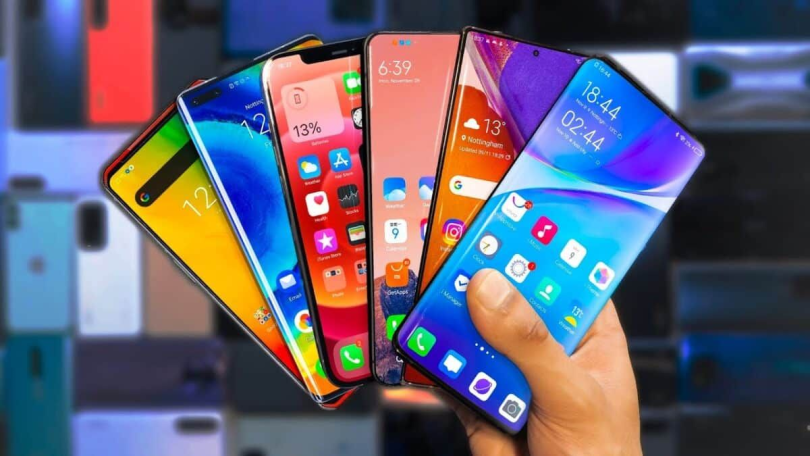

Buying a new phone in 2026 is harder than it looks. Every brand promises a brighter screen, a smarter camera, and artificial intelligence in everything, yet two phones that cost the same can feel completely different after six months of daily use. This smartphone buying guide cuts through the marketing and focuses on the features that change how a phone feels on day one and on day seven hundred. If you work through the sections below in order, you will know exactly what to check in a shop, what to ignore in a spec sheet, and where your money actually makes a difference.

Start With How You Actually Use Your Phone
Before you compare a single model, write down your real routine. Most people use their phone for messaging, social media, photos, video, maps, banking, and a handful of favourite apps. Gamers, creators, and people who work from their phone need more power and storage, while light users often overpay for performance they will never notice. Being honest here is the foundation of any good smartphone buying guide, because the best phone is not the most powerful one on the market. It is the one whose strengths match your habits and whose weaknesses you will rarely encounter.
Also think about how long you plan to keep the device. A phone kept for four years justifies a higher budget, better build quality, and a longer software support window. A phone you replace every eighteen months can be a cheaper mid-range model without much compromise. That single decision shapes almost every recommendation that follows.
The Display: Brightness Matters More Than Resolution
Most modern phones have sharp enough screens that extra resolution is hard to see. What you will notice every day is brightness, especially outdoors, and refresh rate, which controls how smooth scrolling and animations feel. Look for at least 1,200 nits of peak brightness if you use your phone outside often, and a 120Hz refresh rate if you want that fluid feeling when moving through feeds and menus. OLED panels offer deeper blacks and better contrast than LCD panels, and they are now common even in mid-range phones.
Size is a comfort decision, not a status decision. A large 6.7-inch display is wonderful for video and reading, but it can be awkward in one hand and in smaller pockets. If possible, hold the phone before you buy it. Reach the top corners with your thumb, type a short message, and check whether the weight feels balanced. A slightly smaller phone you handle comfortably beats a larger one you constantly adjust in your grip.
Performance: The Chip and the RAM Working Together
The processor decides how fast apps open, how smoothly games run, and how long the phone stays responsive as software gets heavier. Flagship chips are faster, but recent mid-range chips are more than capable for everyday tasks, photography, and most games. If you play demanding 3D titles, edit video, or want the phone to stay fast for years, step up a tier. If you mostly browse, message, and stream, a good mid-range chip will feel identical in daily use.
RAM helps the phone keep apps ready in the background instead of reloading them. Eight gigabytes is a sensible minimum in 2026, with twelve gigabytes giving extra headroom for heavy multitaskers. Storage deserves equal attention. Photos, offline video, and app caches grow quickly, so 256GB is the safer choice for most buyers. Check whether the phone supports expandable storage if you keep large media libraries, because many models no longer do.
Cameras: Look Beyond the Megapixel Count
A 200-megapixel badge does not guarantee better photos. Sensor size, lens quality, and image processing matter far more. A good main camera with optical image stabilisation will give you sharper low-light shots and steadier video than a higher-count sensor without it. An ultra-wide lens is genuinely useful for landscapes, interiors, and group photos. A telephoto lens is worth paying for only if you regularly zoom; otherwise, you are funding a feature you will open twice a year.
Test the camera the way you will use it. Take a quick photo indoors, where light is imperfect, and look at skin tones and detail rather than zooming into corners. Check the front camera if video calls and selfies matter to you, and look at video stabilisation if you film children, pets, travel, or sport. Sample galleries from independent reviews, taken in mixed conditions, are far more revealing than the perfect shots in a launch presentation.
Battery Life and Charging Speed
Battery capacity is measured in milliamp hours, but efficiency matters as much as size. A well-optimised phone with a 5,000mAh battery can outlast a larger battery paired with a hungry display and chip. Look for reviews that report real screen-on time with mixed use, not only video loop tests. Think about your worst day, not your average day: travel, maps, photos, and mobile data drain a battery far faster than Wi-Fi at home.
Charging speed can change your routine. Fast wired charging that restores half the battery in around twenty minutes makes a quick top-up before leaving genuinely useful. Wireless charging is convenient on a desk or bedside table, though it is slower and generates more heat. Check what is in the box, because many phones now ship without a charger, and budget for a compatible fast charger if you want the advertised speeds.
Software Support: The Feature People Forget
A phone is only as good as the software it runs in year three. Longer update commitments mean new features, security patches, and better resale value. Before buying, check how many years of operating system upgrades and security updates the maker promises for that exact model, because policies differ between a brand’s flagship and budget lines. Clean software with few duplicate apps also ages better and leaves more storage for your own apps.
That matters when you set up the phone with the services you rely on. Following a clear installation walkthrough, such as our Guide mobile et téléchargement de 1xBet Afrique, is much easier on a phone that will keep receiving security updates while you use betting, banking, and payment apps. The same applies to specialist tools covered in our Free OnlyFans Downloader iOS Guide, where the steps assume a current, supported version of iOS. A phone abandoned by its maker quickly becomes a poor home for any app that handles accounts or payments.
Build Quality, Connectivity, and the Small Details
Water and dust resistance, rated IP67 or IP68, protects against rain, spills, and the occasional accident, and it is worth having if you keep a phone for years. Gorilla Glass or an equivalent toughened glass on the front, plus a decent case, will prevent most cracked screens. Check for 5G support on the bands your carrier uses, Wi-Fi 6 or newer for faster home connections, and NFC if you pay with your phone. Dual SIM or eSIM support is valuable for travellers and for anyone separating work and personal numbers.
Do not overlook speakers, haptics, and the fingerprint reader. You hear the speakers every time you watch a video without headphones, you feel the vibration motor with every notification, and you unlock the phone dozens of times a day. These small touches separate a phone that feels premium from one that merely looks it on paper.
Price: Where the Smart Money Goes
The best value in 2026 usually sits one step below the flagship tier. Last year’s top model, or a current upper mid-range phone, often delivers ninety percent of the experience for sixty percent of the price. Compare the total cost, including a case, charger, and any extra storage tier, rather than the headline price alone. Trade-in offers and carrier deals can help, but read the conditions, because a cheap phone tied to an expensive long contract is not a saving.
Use this smartphone buying guide as a checklist rather than a ranking. Pick your budget, decide how long you will keep the phone, choose the display size that fits your hand, confirm the update policy, and then compare two or three models on camera and battery results from real-world reviews. Do that, and you will walk away with a phone that still feels right long after the launch hype has faded.